
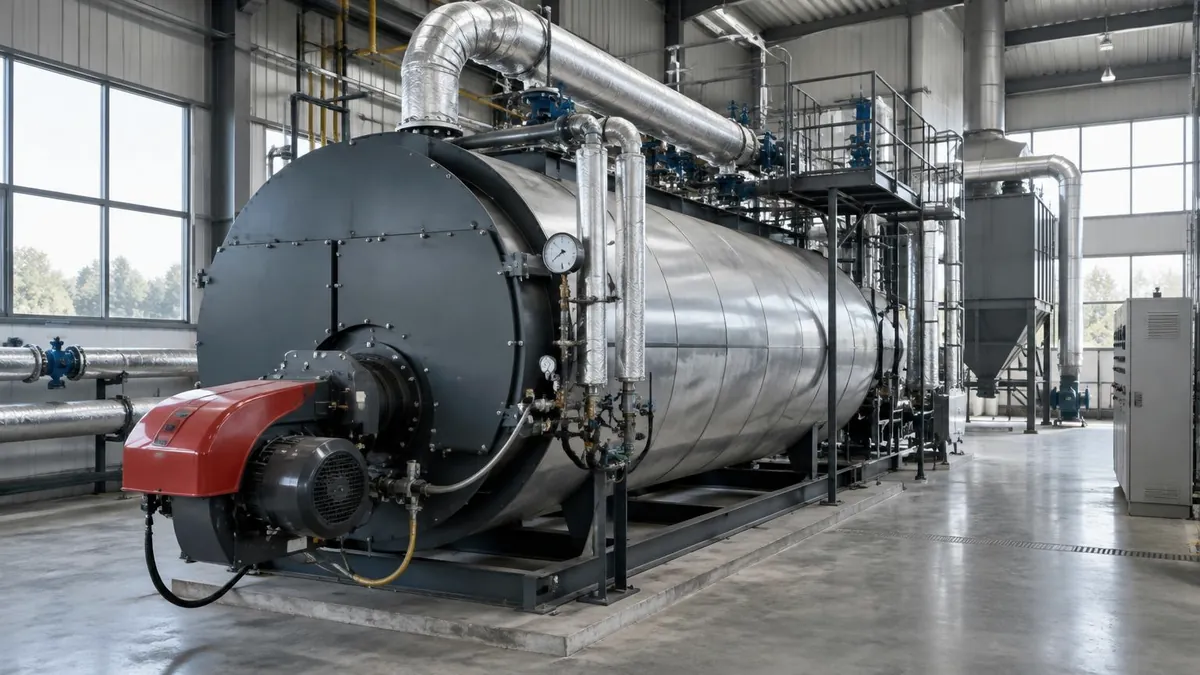
When a gas boiler nears the end of its life, or the gas contract renewal lands with a higher price, the instinct is to call an equipment supplier. Before you do, answer these five questions. They decide whether you end up with a project that saves money for twenty years or an expensive like-for-like swap you regret.
1. What temperature does each process actually need?
Most gas boilers make steam or hot water at a temperature set decades ago, often far above what the processes downstream need. Map each use of heat (washdown, pasteurising, drying, space heating) and the temperature it genuinely requires.
This matters because the technology choice turns on it. Heat pumps are highly efficient, typically delivering several units of heat for each unit of electricity, but they work best at lower temperatures. Electrode boilers and biomass boilers can reach high steam temperatures but cost more to run per unit of heat. Many sites end up with a combination: heat pumps for the low-temperature loads, and a smaller high-temperature unit for what remains.
2. Can you need less heat before you replace anything?
Every kilowatt of heat you no longer need is one you don't have to buy equipment for. Steam leaks, failed traps, poor insulation, condensate that isn't returned and waste heat from compressors or refrigeration are common in older plants. Fixing these first often lets you buy smaller replacement equipment, which lowers both the capital cost and the electrical connection you need.
3. Does your site have the electrical capacity?
This is the question most likely to set your timeline. Replacing gas with electricity can multiply a site's peak electrical demand, and an upgrade to your connection may involve your lines company, new transformers and, sometimes, upstream network work. Lead times can run to many months.
Ask your lines company early what capacity is available and what an upgrade would cost. The answer may change your choice of technology, or the order in which you do things.
4. What will it cost to run, not just to buy?
Compare options on lifetime cost, not purchase price. That means modelling:
- the gas price you would otherwise pay, including the likelihood that it keeps rising;
- your electricity tariff, including demand charges and time-of-use rates;
- maintenance, and the cost and security of biomass fuel supply if you are considering it;
- the carbon cost already built into gas prices through the Emissions Trading Scheme.
A heat pump that costs more up front can be the cheapest option over its life. An electrode boiler that is cheap to install can be expensive to run if it operates through peak tariff periods. Thermal storage or operating flexibility can shift that balance.
5. How will you keep production running during the switch?
Customers don't care about your energy project; they care about their orders. Plan the changeover around your shutdown windows, and consider whether to run old and new plant side by side for a period, stage the project process by process, or keep a small gas capability as backup during the transition.
Then talk to suppliers
With these answers you can brief equipment suppliers properly and compare their proposals on equal terms. You will also have most of what a bank needs to lend under the Gas Transition Loan Guarantee Scheme, and you may qualify for Energy Efficiency and Conservation Authority (EECA) co-funding of an independent assessment to answer these questions in the first place.
Next step: talk to us to discover your options. Start by checking your funding eligibility in two minutes, then book a 30-minute call and we'll work through the right path for your business.