
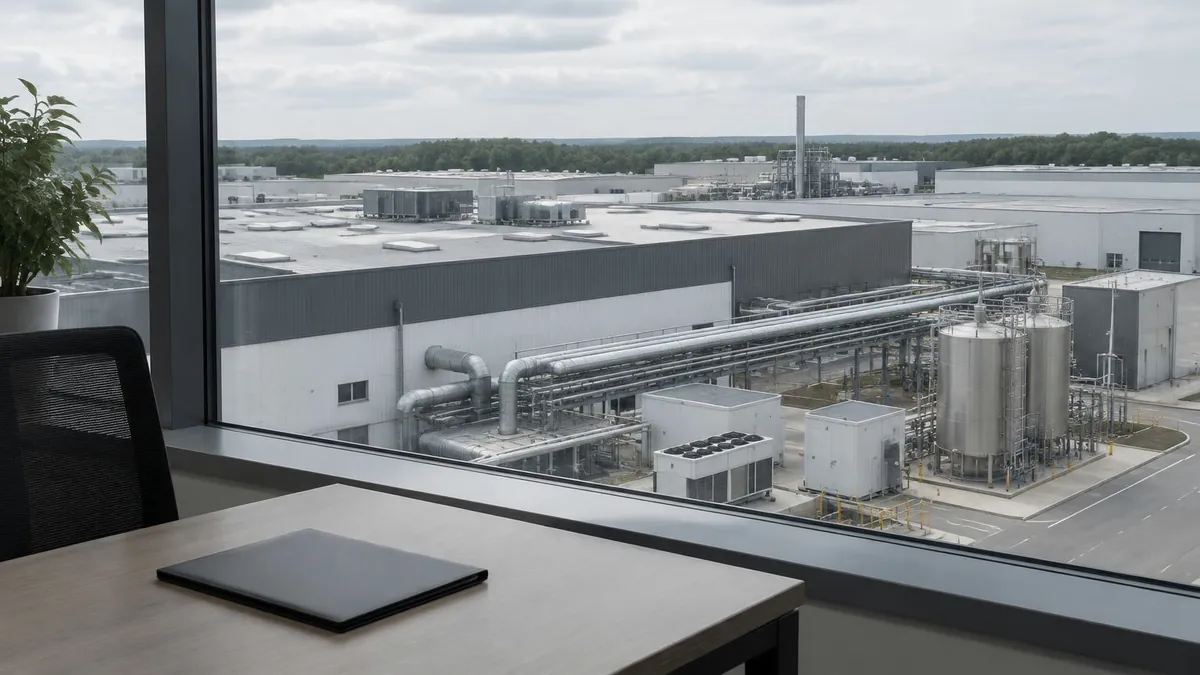
For most mid-sized manufacturers, carbon reporting has felt like something for big listed companies. That is changing, and not because of new rules aimed at you. It is because the organisations you depend on, your bank and your largest customers, now have to report on emissions that include yours.
Your emissions are part of your bank's emissions
New Zealand's large banks, those with more than $1 billion in assets, must publish annual climate statements under the climate-related disclosures regime (MBIE). Those statements cover the emissions linked to their lending, known as financed emissions.
The Government agreed in October 2025 to narrow the regime and reduce directors' liability, mainly for listed companies and fund managers, but banks remain in scope. To estimate financed emissions, a bank can use sector averages or real data from its customers. Averages are blunt and usually unflattering, so banks are steadily asking business customers for actual figures.
Good data is becoming good for your borrowing
Banks are also growing their sustainable lending books, and they need evidence to label a loan green or sustainability-linked. Westpac NZ, for example, reported $7.6 billion of sustainable lending in September 2025 and is targeting $9 billion by September 2027 (Westpac).
The new Gas Transition Loan Guarantee Scheme goes further: to qualify, you must show your project will cut gas use by at least 15%. That is a carbon number in all but name. Manufacturers that can show their baseline and their plan have a clear advantage in getting finance on better terms.
Your Australian customers will be asking too
If you sell into Australia, there is a second source of pressure. Australia's mandatory climate reporting extended to its "Group 2" companies, broadly those meeting two of $200 million revenue, $500 million of assets or 250 employees, from 1 July 2026. From their second reporting year they must report Scope 3 emissions, which include emissions from their suppliers (Sustainability Tracker). For a June year-end company, that second year starts in July 2027, so supplier questionnaires are likely to arrive well before then.
The same is happening with large New Zealand retailers, food brands and exporters that report or have their own targets.
What "carbon numbers" actually means for a manufacturer
You don't need a 100-page sustainability report. You need a credible, repeatable measurement of:
- Scope 1: fuels you burn on site (gas, LPG, diesel, coal) and refrigerant leaks.
- Scope 2: the electricity you buy.
- Key Scope 3 items: where they matter to your customers, for example purchased materials, freight or waste.
These should be calculated using a recognised method, such as the GHG Protocol or ISO 14064-1, with New Zealand emission factors, and the assumptions should be documented so the figures can be checked and updated each year.
How we help you get ahead of the request
Sustainability Partners can set this up for you and keep it current:
- We measure your baseline year. We use your last full financial year, drawing on data that is mostly already in your invoices.
- We identify your hotspots. For many manufacturers, gas-fired process heat is the single largest source.
- We build a realistic reduction plan. We link it to capital decisions you are already facing, such as boiler replacement.
- We keep it current. An annual update means you can answer a bank or customer request in days, not months.
A manufacturer that can hand over clear, credible numbers looks like a lower-risk borrower and a more reliable supplier. One that can't will increasingly be estimated, and the estimate rarely flatters.
Next step: talk to us to discover your options. Book a 30-minute call and we'll work through measuring your footprint, or read about our carbon footprinting service.
Information current as of October 2026.